
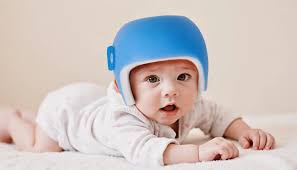
Many babies are born with or develop head shape abnormalities that may require a cranial helmet for babies, especially when repositioning alone does not correct flattening, such as plagiocephaly (flat head), brachycephaly (short, wide head), or scaphocephaly (long, narrow head). While some mild cases improve naturally with repositioning, cranial helmets are often recommended for moderate to severe deformities. Parents should also understand when medical care for baby head shape becomes necessary if flattening continues to progress.
This blog explains how cranial helmets work, when they are used, and what parents can expect during treatment.
What is a Cranial Helmet?
A cranial helmet (also called a cranial molding helmet or orthotic helmet) is a custom-fitted medical device designed to gently shape a baby’s skull as it grows. It works by applying pressure to certain areas of the head while allowing growth in areas that need expansion.
Cranial helmets are non-invasive and are typically used for babies with:
- Positional plagiocephaly
- Brachycephaly
- Scaphocephaly
- Post-surgical skull correction (after craniosynostosis surgery)
Parents considering available plagiocephaly treatment options can explore evaluation and therapy approaches with a specialist.
Cranial helmets are primarily used for positional plagiocephaly and brachycephaly, and sometimes after endoscopic craniosynostosis surgery. True scaphocephaly caused by sagittal craniosynostosis typically requires surgical evaluation rather than helmet therapy alone.
How Do Cranial Helmets Work?
The baby’s skull bones are soft and malleable during the first year of life. A cranial helmet works by:
- Gently guiding skull growth – Helmets guide growth by providing room where the head is flat and gently limiting growth where it is more prominent.
- Encouraging symmetry – Over time, this helps the head achieve a more balanced shape.
- Custom-fit design – Helmets are molded specifically to each baby’s head for safe and effective treatment.
Parents often ask whether helmet therapy truly improves outcomes. Learn more about whether helmet therapy works for flat head syndrome before starting treatment.
When Are Cranial Helmets Recommended?
Helmet therapy plagiocephaly treatment is most effective when used during the early months, typically between 4–12 months, because the skull is still flexible. They are recommended in the following scenarios:
- Flattening does not improve with repositioning therapy
- Moderate to severe positional plagiocephaly or brachycephaly
- Babies with cranial asymmetry after surgery for craniosynostosis
For infants recovering after craniosynostosis procedures, specialists may recommend craniosynostosis helmet therapy as part of post-surgical shaping support.
Note: Helmets are rarely needed for mild or mild-moderate cases that respond to repositioning and tummy time.
How Long Does a Baby Wear a Cranial Helmet?
- Babies using a baby head shape helmet typically wear helmets 18–23 hours per day.
- Treatment duration ranges from 3–6 months, depending on age and severity
- Regular follow-up visits are necessary for adjustments as the skull grows
Parents wanting a deeper explanation of helmet timelines and expectations can review this guide on cranial helmet for flat head treatment for babies.
Benefits of Cranial Helmet for Babies
- Non-invasive correction – Avoids surgery for many positional head deformities
- Improved head symmetry – Helps restore a balanced, natural head shape
- Supports developmental health – Allows space for normal brain growth
- High success rate – Most babies achieve noticeable improvement in head shape
Things Parents Should Know
Safety
Cranial helmets are generally safe, with minimal side effects. Some babies may experience mild baby head shape helmet side effects, including:
- Mild skin irritation
- Sweating under the helmet
- Temporary discomfort during adjustment
Care
- Helmets should be cleaned daily and worn according to the prescribed schedule
- Avoid removing the helmet except during cleaning or approved breaks
Monitoring Progress
- Regular check-ups are needed to track skull growth
- Adjustments ensure optimal fit and effectiveness
Alternative or Complementary Treatments
While helmets are highly effective, they may be combined with:
- Repositioning therapy – Encouraging tummy time and changing sleep positions
- Physical therapy – For babies with neck tightness or torticollis
- Post-surgical cranial support – After craniosynostosis surgery
Long-Term Outlook
Most babies using a cranial helmet for babies achieve improved head symmetry with minimal long term effects of cranial helmet therapy.
and normal skull development. Early treatment leads to better cosmetic results and reduces the need for future interventions. Most children grow up with no long-term complications related to helmet use.
Conclusion
Cranial helmets are an effective, safe, and non-invasive option for treating moderate to severe head shape abnormalities in infants. Early intervention, combined with repositioning therapy and regular monitoring, helps ensure healthy skull growth and improved head symmetry.
Parents noticing head flattening or asymmetry should consult a pediatrician or craniofacial specialist to determine if a cranial helmet is appropriate.
Schedule a Pediatric Craniofacial Consultation
NJ Craniofacial Center Providing expert, compassionate craniofacial care for children across New Jersey.
FAQ: Cranial Helmet for Babies
Are there side effects of baby head shape helmet therapy?
Most babies experience only mild temporary skin irritation or sweating. Serious side effects are rare.
What are the long term effects of cranial helmet treatment?
Research shows cranial helmets are safe and do not affect brain development or long-term skull growth.
When is a cranial helmet recommended for babies?
Helmet therapy is usually recommended between 4–12 months for moderate or severe plagiocephaly that does not improve with repositioning.
Does helmet therapy work for plagiocephaly?
Yes, helmet therapy plagiocephaly treatment helps guide skull growth and improve head symmetry in most infants.
